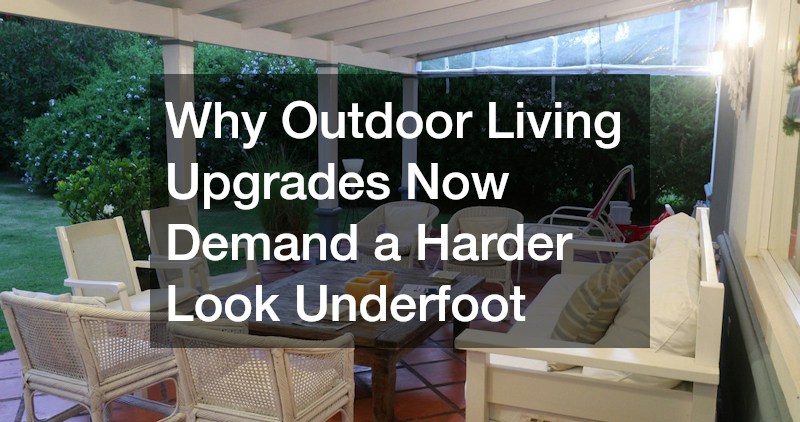
More homeowners are pouring money into patios, outdoor kitchens, and backyard lounges than ever before, but few stop to think about what lies beneath those beautiful upgrades. A stunning deck or fire pit area means little if the ground underneath is unstable, poorly drained, or harboring pests that make outdoor living miserable. Before you invest in furniture and finishes, it pays to understand the roofing, drainage, soil, and pest factors that quietly determine whether your outdoor space will hold up. This article breaks down the often-overlooked systems that deserve attention before, during, and after your next outdoor renovation.
Evaluate Roof Overhangs and Covered Patio Structures

Many outdoor living upgrades now include covered patios, pergolas with solid roofing, or attached structures that tie directly into the home’s existing roofline. These additions change how water moves across your property, and poor integration can lead to leaks, pooling, or damage to both the new structure and the original roof. Before building any covered outdoor space, it is worth having a professional assess how the new roofline will handle drainage and flashing.
A qualified TPO roofing contractor can evaluate whether a low-slope or flat roofing membrane makes sense for a covered patio or outdoor kitchen extension, since TPO is popular for its affordability and resistance to UV exposure. This matters more than homeowners realize, since mismatched materials or improper slope can send water pooling straight into your new living space. Getting this piece right at the design stage saves significant repair costs later.
- Confirm the new roof section ties properly into existing gutters and downspouts
- Choose roofing materials rated for the specific slope of your addition
- Ask about warranty coverage for seams and flashing points
- Inspect the structure annually for membrane wear or separation
Assess Soil Stability Before Adding Hardscaping
Patios, walkways, and outdoor kitchens are heavy, and the ground beneath them needs to support that weight without shifting or settling unevenly. Soil composition varies significantly from one yard to the next, and clay-heavy or poorly compacted soil can cause pavers to crack or sink within just a few seasons. A simple soil test or consultation with a landscaping professional can reveal whether you need additional excavation or a gravel base layer.
Drainage also plays a major role in soil stability, since water trapped beneath hardscaping can erode support layers over time. Grading your yard so water flows away from new structures, rather than pooling underneath them, is one of the most cost-effective steps you can take. Skipping this step is one of the most common reasons outdoor upgrades fail prematurely.
- Test soil drainage by digging a small hole and timing how fast water absorbs
- Add a compacted gravel base beneath pavers or stone surfaces
- Grade soil away from the house and new structures by at least two percent
- Consider French drains in areas prone to standing water
Account for Septic and Drain Field Locations
Many homeowners planning a new patio, pool, or outdoor kitchen forget to check where their septic system components sit underground. Building directly over or too close to an ATU drain field can damage the system and create costly, unpleasant problems down the road. Before finalizing any outdoor layout, pull your property’s septic records or have the system mapped by a professional.
Advanced treatment unit systems require airflow and unobstructed soil absorption to function properly, so heavy structures or impermeable surfaces placed on top can interfere with treatment efficiency. This is especially important for homeowners adding large patios, sheds, or in-ground features. Planning around these systems from the start avoids expensive repairs and potential health hazards later.
- Request a septic system map from your local health department or installer
- Keep hardscaping at least ten feet away from drain field boundaries
- Avoid planting trees with invasive roots near treatment areas
- Schedule septic inspections before and after major landscaping work
Manage Pest Pressure in Newly Developed Outdoor Spaces
Creating a more inviting backyard often means more time spent in grass, mulch beds, and shaded areas, which unfortunately also means more exposure to ticks and other pests. Ticks thrive in tall grass, leaf litter, and the transition zones between lawns and wooded areas, which are exactly the spots many new outdoor living spaces border. Taking a proactive approach to tick control before you finish landscaping can make a significant difference in how safely your family enjoys the new space.
Simple landscaping choices, like creating a gravel or wood chip barrier between lawn and wooded areas, can reduce tick migration into your yard. Keeping grass trimmed short and removing leaf litter near patios and play areas further reduces habitat. Many homeowners also schedule seasonal treatments to keep populations down during peak warm-weather months.
- Create a three-foot barrier of gravel or mulch between lawns and wooded edges
- Mow regularly and remove tall grass near seating areas
- Keep firewood stacks away from the house and patio
- Consider professional seasonal treatments during spring and summer
Plan Utility and Drainage Access Before Finalizing Designs
Outdoor kitchens, fire features, and lighting systems all require utility access, and retrofitting these after hardscaping is complete is far more expensive than planning ahead. Before pouring concrete or laying pavers, map out where gas lines, electrical conduit, and water lines will run. This foresight prevents the frustrating scenario of tearing up a finished patio to add a forgotten connection.
Drainage access points, including cleanouts and downspout extensions, should also factor into your design so they remain reachable for maintenance. Leaving small inspection points or removable pavers near critical access areas keeps future repairs manageable. A little extra planning during the design phase pays off every time a system needs servicing.
- Mark utility lines before excavation begins
- Install conduit for future electrical needs even if not used immediately
- Keep septic and drainage cleanouts accessible and unobstructed
- Document the location of buried lines for future reference
A beautiful outdoor living space is only as reliable as the systems hidden beneath it, from roofing choices to soil, septic, and pest considerations. Taking time to evaluate these underlying factors before construction begins can save significant money, stress, and rework later. Start by consulting qualified professionals for any structural, drainage, or septic questions specific to your property. With the right groundwork in place, your outdoor upgrade will be something you enjoy for years rather than something you have to fix.